- Indonesia emerges as KT&G's largest overseas production base, with annual cigarette production capacity set to reach up to 35 billion sticks, strengthening its Asia-Pacific hub
- KT&G enters the final stage of its KRW 2.4 trillion overseas CAPEX program, backed by strengthened financial stability and continued commitment to enhancing shareholder and corporate value
SEOUL, South Korea, Oct. 7, 2026 /PRNewswire/ -- KT&G (CEO Bang Kyung-man) has begun full-scale operations at its new plant in Indonesia, completing a five-country global production system spanning South Korea, Indonesia, Russia, Kazakhstan, and Türkiye.
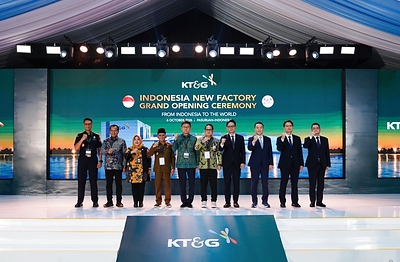
To mark the start of full-scale production, KT&G held an opening ceremony at the new plant in Pasuruan, East Java, on October 6 (local time). The event was attended by CEO Bang Kyung-man, KT&G executives and employees, Adhy Karyono, Regional Secretary of East Java Province, Yoon Soon-goo, Ambassador of the Republic of Korea to Indonesia, and other distinguished guests.
Indonesia is one of the world's major tobacco markets and an important export hub for the Asia-Pacific region. KT&G first entered the Indonesian market in 2011 through the acquisition of a local company. Since then, the company has launched ESSE, its globally leading super-slim cigarette brand, and JUARA, a brand developed specifically for Indonesia, and now ranks fourth in Indonesia's cigarette market by market share.
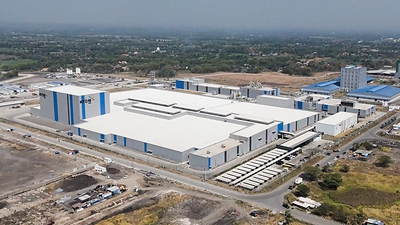
To meet growing demand in Indonesia and overseas markets, KT&G has built a new plant alongside its existing facility. Following an agreement with Indonesia's Ministry of Investment/Investment Coordinating Board (BKPM) in September 2023, the company broke ground on the new plant in April 2024 and began trial operations in the first half of 2026.
The new plant has now entered stable production. Once all nine cigarette manufacturing lines are installed, it will have an annual production capacity of up to 21 billion sticks. Combined with the existing plant's annual capacity of 14 billion sticks, KT&G's total cigarette production capacity in Indonesia is expected to reach up to 35 billion sticks, making Indonesia the company's largest overseas production base.
Leveraging Indonesia's strategic location between the Pacific and Indian Oceans, cigarettes produced at the new plant will be supplied not only to the Indonesian domestic market but also to overseas markets including Taiwan, Mongolia, Nigeria, and India. The new facility is expected to serve as a key export hub, supporting KT&G's expansion across the Asia-Pacific region and other global markets.
The construction of KT&G's new overseas plants is part of the growth investment program the company launched in January 2023. Following the completion of its new plant in Kazakhstan in April 2025 and the start of full-scale operations at the new Indonesia plant, KT&G has completed a significant portion of its previously announced KRW 2.4 trillion overseas capital expenditure program, unveiled in November 2024. Backed by strengthened financial stability, the company will continue to enhance shareholder value through share buybacks and cancellations, as well as increased dividend payouts.
Looking ahead, KT&G's four overseas production bases in Indonesia, Russia, Kazakhstan, and Türkiye are expected to have a combined annual production capacity of up to 65 billion sticks. By leveraging economies of scale and improving logistics efficiency, the company plans to increase the share of overseas production to more than 60% of its total production by 2028.
Bang Kyung-man, CEO of KT&G, said, "With the new plant in Indonesia as the final piece, KT&G has completed its large-scale overseas investment program and established a five-country global production system that will serve as a solid foundation for our global business and future growth. By strategically leveraging our production bases in Korea and overseas, we will maximize profitability, strengthen the competitiveness of our global business, and continue to increase shareholder and corporate value."
KT&G continues to expand its direct presence in global markets. The company currently operates six overseas subsidiaries in countries including Indonesia, Taiwan, Kazakhstan, and Uzbekistan, and six overseas branch offices in regions including Europe, Mongolia, and China.

 View original content to download multimedia:https://www.prnewswire.co.uk/news-releases/ktg-begins-full-scale-operations-at-new-indonesia-plant-completing-five-country-global-production-system-302900993.html

Eineinhalb Wochen nach der Berlin-Wahl kommt die Regierungsbildung in der Hauptstadt kaum voran. Zwar trafen sich Spitzenvertreterinnen und -vertreter von Linke, Grünen und SPD zu einem ersten Dreier-Treffen, doch eine gemeinsame Linie im Umgang mit Antisemitismus, Rassismus und organisierter Kriminalität zeichnet sich bislang nicht ab. Nach rund fünfstündigen Beratungen sprachen die Parteivorsitzenden Kerstin Wolter (Linke), Nina Stahr (Grüne) und Bettina König (SPD) lediglich von einem „konstruktiven“ Austausch – konkrete Ergebnisse präsentierten sie nicht.
Das vertrauliche Vorgespräch im Haus der Statistik nahe dem Alexanderplatz gilt als Voraussetzung für formale Sondierungsgespräche über eine mögliche rot-grün-rote Koalition. Grünen und SPD ist nach eigenen Angaben wichtig, dass die Linke klare und belastbare Zusagen im Kampf gegen Antisemitismus und zur Distanzierung von organisierter Kriminalität gibt. Das Misstrauen ist ausgeprägt: Mehrere Vorfälle in den Reihen der Linken hatten im Vorfeld für Besorgnis bei den potenziellen Partnern gesorgt.
Besonders kritisch gesehen wird, dass bei einer Wahlparty der Neuköllner Linken am 20. September sowohl ein Oberhaupt eines arabischstämmigen und zum Teil kriminellen Clans als auch ein umstrittener propalästinensischer Aktivist anwesend waren. Hinzu kommt die frühere Mitgliedschaft der Spitzenkandidatin Elif Eralp im Verein „Rote Hilfe“, der vom Verfassungsschutz seit 2012 als wichtige linksextremistische Gruppierung beobachtet wird. Die Organisation versteht sich zwar als Solidaritätsverein für linke Aktivisten mit Problemen mit dem Rechtsstaat, gilt den Sicherheitsbehörden aber als zentrale Struktur im Linksextremismus. Zuletzt trat auch der Vorsitzende der Linksfraktion im Bundestag, Sören Pellmann, der „Roten Hilfe“ bei.
Offen ist, wann die Gespräche in Berlin fortgesetzt werden. Die drei Parteien betonen, man wolle weiter miteinander reden, ein genauer Zeitplan wurde jedoch nicht genannt. Innerhalb der SPD wird bereits damit gerechnet, dass es mehr als ein Vorgespräch brauchen wird, bevor formelle Sondierungen starten können. Auf Bundesebene werden die Entwicklungen genau verfolgt: Die Hauptstadtwahl gilt als Stimmungsbarometer für den Umgang der Parteien mit Antisemitismus- und Extremismusvorwürfen – und als Belastungstest dafür, wie tragfähig ein erneutes Bündnis von Linken, Grünen und SPD in Berlin sein könnte.




