Collaboration's initial focus will focus on two antibody programs targeting CNS diseases
VALBY, Denmark and AMSTERDAM, June 3, 2026 /PRNewswire/ -- H. Lundbeck A/S (Lundbeck), a global biopharmaceutical company focused exclusively on brain health, and Cradle, a leading AI platform for protein engineering, today announced a partnership to help Lundbeck discover and optimize biotherapeutics that ultimately can improve patient outcomes.

It is estimated that more than half of the world's population is impacted by brain disorders, and the effects are felt throughout society. Speeding up innovation time to develop high-quality biologics is a critical part of bringing effective new treatments to patients. As part of its aim to ease this burden and bring new treatments to patients in need, Lundbeck is deploying Cradle's AI-powered protein design platform to develop multiple higher-performing candidates that can accelerate breakthroughs for neurological conditions.
"Lundbeck is committed to becoming a bionic company, embedding AI into how we work to complement human expertise and bring faster results," said Tarek Samad, SVP, Global Head of Research and Corporate Patents at Lundbeck. "Our partnership with Cradle fits perfectly with this commitment as their platform provides our scientists with powerful AI that fits seamlessly into our processes, strengthening our ability to discover and optimize therapeutics."
The partnership is powering Lundbeck's first end-to-end AI-guided protein engineering workflow, where experimental results are continuously fed back into the model, enabling each iteration to improve prediction accuracy and accelerate convergence toward viable candidates. The platform will initially be used to advance two antibody programs targeting CNS diseases. Lundbeck's protein engineers and computational biologists will use Cradle's generative AI platform to engineer higher-quality antibody candidates while reducing the number of wet-lab iterations required to reach lead candidates.
"Lundbeck has a strong biotherapeutic pipeline in CNS and is now strengthening that position with the power of AI across their research and development organization," said Stef van Grieken, CEO and Co-Founder of Cradle. "The Cradle platform has been shown in internal and partner programs to accelerate design cycles significantly. By closing the loop between computation and the lab, we can help Lundbeck reach high-quality antibody candidates faster and with fewer iterations."
The Cradle partnership builds on Lundbeck's systematic embrace of AI to accelerate its Focused Innovator strategy. It complements a recently announced partnership with the Danish Centre for AI Innovation, which provides Lundbeck access to Denmark's Gefion AI supercomputer with advanced AI computing power for large-scale scientific modelling and discovery. Together, the two partnerships will strengthen Lundbeck's end-to-end AI discovery capabilities, from expanding the scientific search space to improving and accelerating specific biologic candidates.
Across the organization, Lundbeck estimates AI-driven initiatives are already contributing more than 12,000 hours saved per week through efficiency gains. In drug discovery specifically, AI-enabled structural insights and predictions that once took months can now be generated in under 24 hours, while expanding the searchable scientific space by approximately 50,000x.
About H. Lundbeck A/S
Lundbeck is a biopharmaceutical company focusing exclusively on brain health. With more than 70 years of experience in neuroscience, we are committed to improving the lives of people with neurological and psychiatric diseases.
Brain disorders affect a large part of the world's population, and the effects are felt throughout society. With the rapidly improving understanding of the biology of the brain, we hold ourselves accountable for advancing brain health by curiously exploring new opportunities for treatments.
As a focused innovator, we strive for our research and development programs to tackle some of the most complex neurological challenges. We develop transformative medicines targeting people for whom there are few or no treatments available, expanding into neuro-specialty and neuro-rare from our strong legacy within psychiatry and neurology.
We are committed to fighting stigma and we act to improve health equity. We strive to create long term value for our shareholders by making a positive contribution to patients, their families and society as a whole.
Lundbeck has more than 5,000 employees in more than 20 countries and our products are available in more than 80 countries. For additional information, we encourage you to visit our corporate site www.lundbeck.com and connect with us via LinkedIn.
About Cradle
Cradle's mission is to make engineering biology easier, quicker and more cost-effective. Its enterprise-grade AI software platform currently serves eight out of the top 25 global pharma companies, and is used across over 50 R&D programs. With Cradle, scientists can engineer better proteins, faster and more successfully, speeding up the development cycle of new therapeutics and bio-based products such as, antibodies, enzymes, and bio-based materials by 2-12x. Cradle is based in Amsterdam, The Netherlands; Zurich, Switzerland and the United States with a team of machine learning and biotech research specialists with experience at many of the world's leading technology and biotech companies, including Google, Novartis, Meta, Zymergen, Uber, Deepmind and Generate Biomedicines. Cradle is backed by IVP as well as Index Ventures and Kindred Capital. For more information, visit cradle.bio.
Logo - https://mma.prnewswire.com/media/2846228/Cradle_Logo.jpg
 View original content:https://www.prnewswire.co.uk/news-releases/lundbeck-partners-with-cradle-to-discover-and-optimize-brain-disorder-treatments-302789420.html

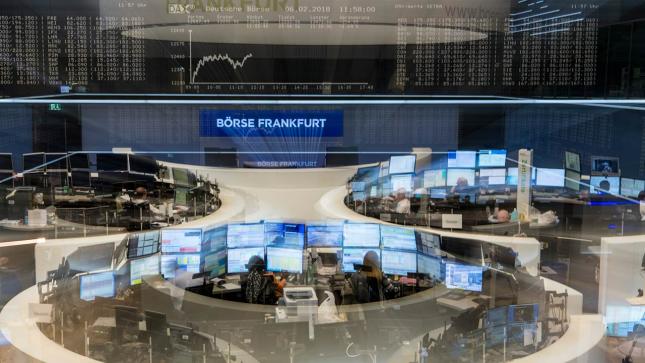
Der deutsche Aktienmarkt ist nach dem verlängerten Wochenende mit leichten Gewinnen in den Mai gestartet. Der Dax notierte wenige Minuten nach Xetra-Eröffnung am Montag 0,14 Prozent höher bei 24.328 Punkten und knüpfte damit an die kräftige Erholung vom vergangenen Donnerstag an. Bereits der vorbörsliche X-Dax hatte auf einen freundlichen Start hingedeutet und lag rund eine Stunde vor Handelsbeginn 0,35 Prozent im Plus bei 24.377 Punkten.
Am letzten Handelstag vor dem Feiertag hatte der Leitindex mit einer deutlichen intraday-Trendwende das angeschlagene Chartbild aufgehellt. Nach einem Start am Tagestief von 23.715 Punkten gewann der Dax im Verlauf fast zweieinhalb Prozent und schloss auf Tageshoch. Der MDax der mittelgroßen Werte setzte die Erholung am Montag mit einem Plus von 0,77 Prozent auf 30.826 Zähler dynamischer fort, während der Eurozonen-Leitindex EuroStoxx 50 leicht im Minus lag.
Die Stimmung bleibt dennoch fragil. Marktteilnehmer beobachten weiter die Entwicklung im Nahost-Krieg, die Ölpreisentwicklung und insbesondere die Lage rund um die Straße von Hormus. Die Situation habe sich über das Wochenende „nicht wesentlich verbessert, aber auch nicht wesentlich verschlechtert“, sagte Andreas Lipkow von CMC Markets. Die Nachrichtenlage sei nach wie vor undurchsichtig, was die Risikobereitschaft der Investoren bremse.
Zusätzlichen Druck erhält der Markt von der Handelspolitik der USA. US-Präsident Donald Trump kündigte auf seiner Plattform Truth Social eine deutliche Anhebung der US-Zölle auf Fahrzeuge aus der EU an und zielte dabei besonders auf Europa und Deutschland. Die EU-Kommission behält sich Gegenmaßnahmen vor, sollte Washington die Pläne umsetzen. An die Rhetorik Trumps haben sich Anleger indes ein Stück weit gewöhnt: Laut Jens Klatt vom Broker XTB waren frühere Zolldrohungen häufig Teil der Verhandlungsmasse oder wurden im Zeitverlauf angepasst. Er hält auch diesmal rasche bilaterale Gespräche zwischen den USA, der EU und deutschen Herstellern für wahrscheinlich.
Ungeachtet dieser Einordnung standen Autoaktien zum Wochenauftakt unter Druck. BMW, Mercedes-Benz und Volkswagen wurden im vorbörslichen Handel auf Tradegate unter ihren Xetra-Schlusskursen vom vergangenen Donnerstag gesehen und galten auch im Dax als Belastungsfaktor. Die Kombination aus geopolitischen Risiken, unsicherer Handelspolitik und sektorbezogenen Zolldrohungen dürfte den Sektor vorerst volatil halten, selbst wenn der Gesamtmarkt zum Start in den Mai einen überwiegend freundlichen Ton anschlägt.