SUZHOU, China, May 25, 2026 /PRNewswire/ -- GCL System Integration (GCL SI) joined partners and stakeholders at Getz Energy's "Getz Energy Open House: Welcome to the Smart Energy Revolution" to explore trends in large-scale solar deployment and smart energy integration as Thailand accelerates renewable energy development.
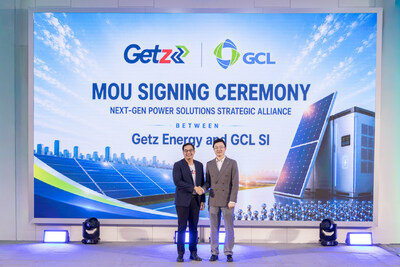
At the event, GCL SI and Getz Energy Company Limited (Getz), a wholly-owned subsidiary of Global Power Synergy Public Company Limited (GPSC), signed a Memorandum of Understanding (MOU) covering the planned supply of up to 1 GW equivalent of photovoltaic modules over the next three years, supporting the expansion of solar generation capacity in Thailand.
The agreement aligns with GPSC's long-term renewable energy strategy while strengthening Getz Energy's role in Thailand's growing clean energy market through utility-scale solar projects and intelligent energy management solutions. The partnership also reinforces both companies' focus on next-generation solar technologies and regional energy infrastructure development.
Under the agreement, GCL SI will supply its photovoltaic modules and battery energy storage systems for large-scale solar and hybrid solar applications. Deliveries are expected to be phased to match construction and grid connection schedules, ensuring timely module supply throughout project execution.
Showcasing Advanced Module Technologies at Getz Open House
At the exhibition, GCL SI showcased several flagship products, including the SiRo T Series NT12/66GDF module, as well as the SiRo B Series NR12R/66GDF and NR10R/54BGDF modules. Corresponding solar cells were also displayed alongside the modules, giving visitors a closer look at GCL SI's latest cell technologies and manufacturing capabilities.
Designed for utility-scale and industrial applications, the SiRo T series integrates advanced TOPCon 2.0 technology, bifacial power generation capability, enhanced operational stability, and long-term durability to support reliable energy output under demanding real-world operating conditions. Optimized for industrial rooftops, large-scale solar installations, and high-temperature environments, the series is engineered to deliver stable, cost-effective performance across the project lifecycle.
Meanwhile, the SiRo B Series, built on GCL's advanced GPC technology, combines high conversion efficiency with enhanced visual integration for premium distributed solar applications. Featuring ultra-low reflectivity films, high-purity FBR granular silicon, and advanced passivation technologies, the series is engineered to deliver strong performance while maintaining a refined visual profile.
Expanding Renewable Energy Cooperation Across Southeast Asia
For Getz and GPSC, the power and energy flagship of the PTT Group, the agreement supports the continued growth of their renewable energy portfolio, with utility-scale solar serving as a key component of the group's long-term low-carbon generation strategy.
For GCL SI, the MOU further strengthens its presence in Southeast Asia's solar market and reinforces its position in Thailand's renewable energy market. The agreement also reflects the company's growing role in meeting regional demand for higher-efficiency photovoltaic technologies used in large-scale solar applications.
More broadly, the partnership highlights the rapid growth of utility-scale renewable energy development across Southeast Asia, where rising electricity demand, grid modernization, and decarbonization targets are driving investment in next-generation solar infrastructure.
Photo - https://mma.prnewswire.com/media/2986839/20260522094401_44_1123.jpg
 View original content:https://www.prnewswire.co.uk/news-releases/gcl-si-and-getz-energy-sign-mou-for-1-gw-of-advanced-pv-modules-to-support-thailands-clean-energy-transition-302780966.html

Eine große Mehrheit der Bundesbürger stellt sich laut einer neuen Erhebung gegen mögliche Einschnitte bei den Leistungen der Pflegeversicherung. 77 Prozent der erwachsenen Bevölkerung halten es für überhaupt oder eher nicht akzeptabel, den Zugang zu Pflegegraden zu erschweren. Das geht aus einer repräsentativen Umfrage des Instituts YouGov im Auftrag des Sozialverbands VdK hervor, die Mitte April unter mehr als 2.300 Menschen durchgeführt wurde.
Die Befragten reagierten insbesondere sensibel auf Vorschläge, die Einstufung in einen höheren Pflegegrad zu verschärfen: 72 Prozent lehnen dies ab. Auch Kürzungen bei den Leistungen im niedrigsten Pflegegrad stoßen auf deutliche Vorbehalte. 71 Prozent bewerten eine Reduzierung der Leistungen in Pflegegrad 1 als überhaupt oder eher nicht akzeptabel. Nach Einschätzung des VdK könnten hiervon etwa Zuschüsse für den Hausnotruf oder für Pflegehilfsmittel betroffen sein. 55 Prozent äußerten sich zudem ablehnend zu möglichen Zusammenfassungen und Deckelungen von Leistungen.
Die Diskussion über die künftige Finanzierung der Pflegeversicherung läuft vor dem Hintergrund spürbarer Haushaltszwänge. Eine Bund-Länder-Arbeitsgruppe hatte bereits im Dezember Reformoptionen skizziert. Bundesgesundheitsministerin Nina Warken (CDU) verwies damals auf begrenzte Mittel, die zielgerichteter eingesetzt werden müssten, und kündigte eine grundlegende Finanzreform der Pflegeversicherung bis Ende 2026 an. Die bestehenden Leistungen sollen dabei nach ihren Worten kritisch überprüft werden.
Im April stellte Warken Pläne für eine Pflegereform für Mitte Mai in Aussicht. Nach ihren Angaben klafft allein im kommenden Jahr eine Finanzierungslücke von sechs Milliarden Euro in der Pflegeversicherung. Die Ministerin betonte zugleich, Pflegebedürftige und ihre Angehörigen nicht allein lassen zu wollen. Parallel dazu hatte das Bundeskabinett erst kürzlich Gesetzesplänen zur Stabilisierung der gesetzlichen Krankenversicherung zugestimmt, die für gesetzlich Versicherte höhere Zuzahlungen und Leistungseinschnitte vorsehen – ein Signal, dass der finanzielle Spielraum im Gesundheitswesen insgesamt enger wird.